Unit One
Desk Lamp
-
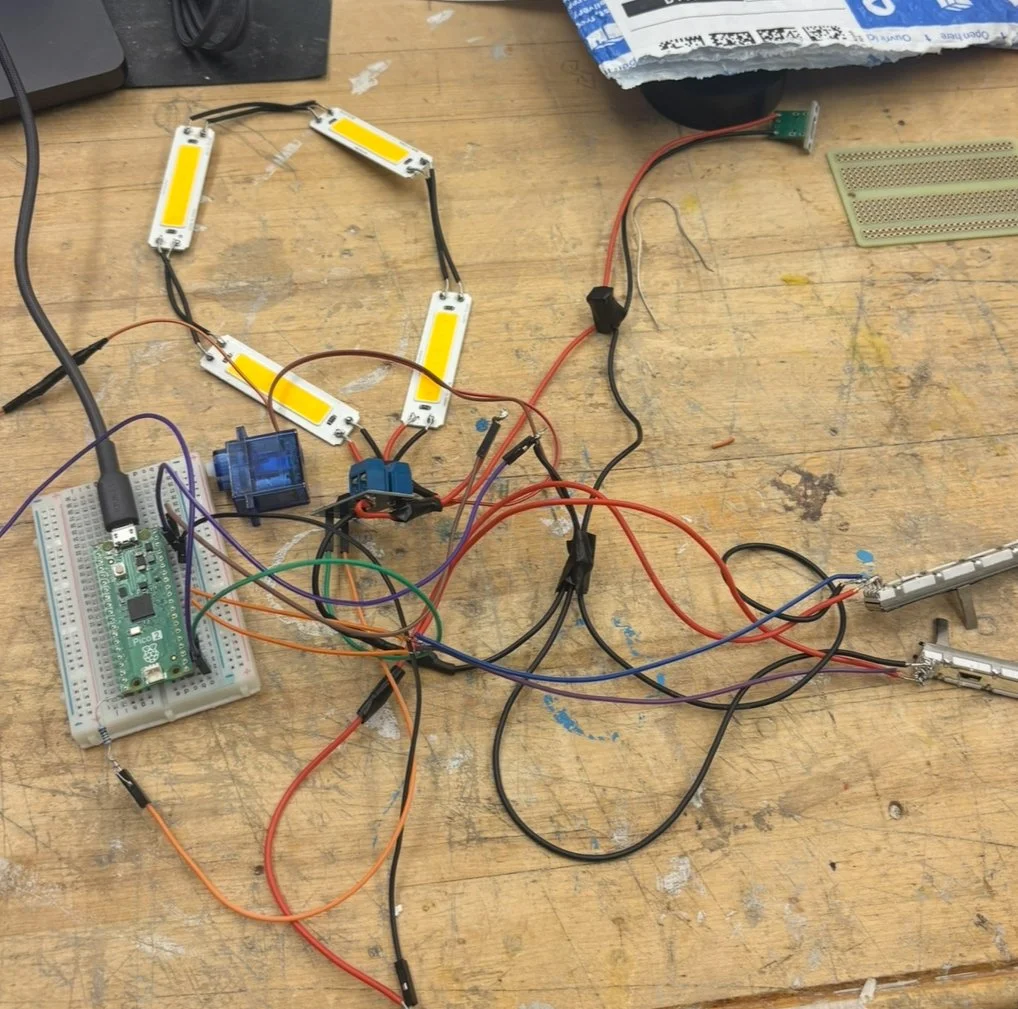
Using a limited set of electronic components, the task was to design a functional product that meaningfully integrated light and physical interaction using a pico 2 coded with python.
-
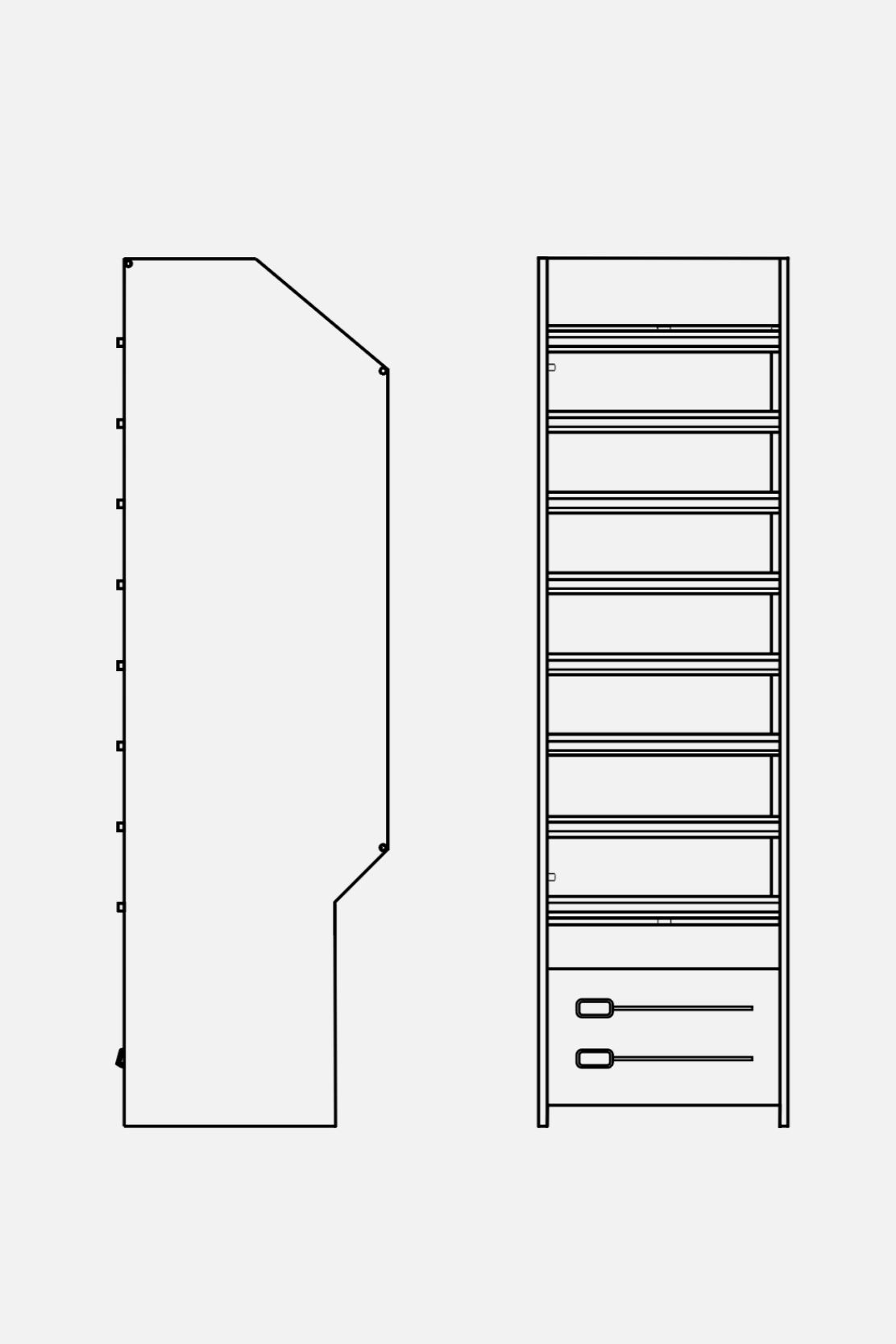
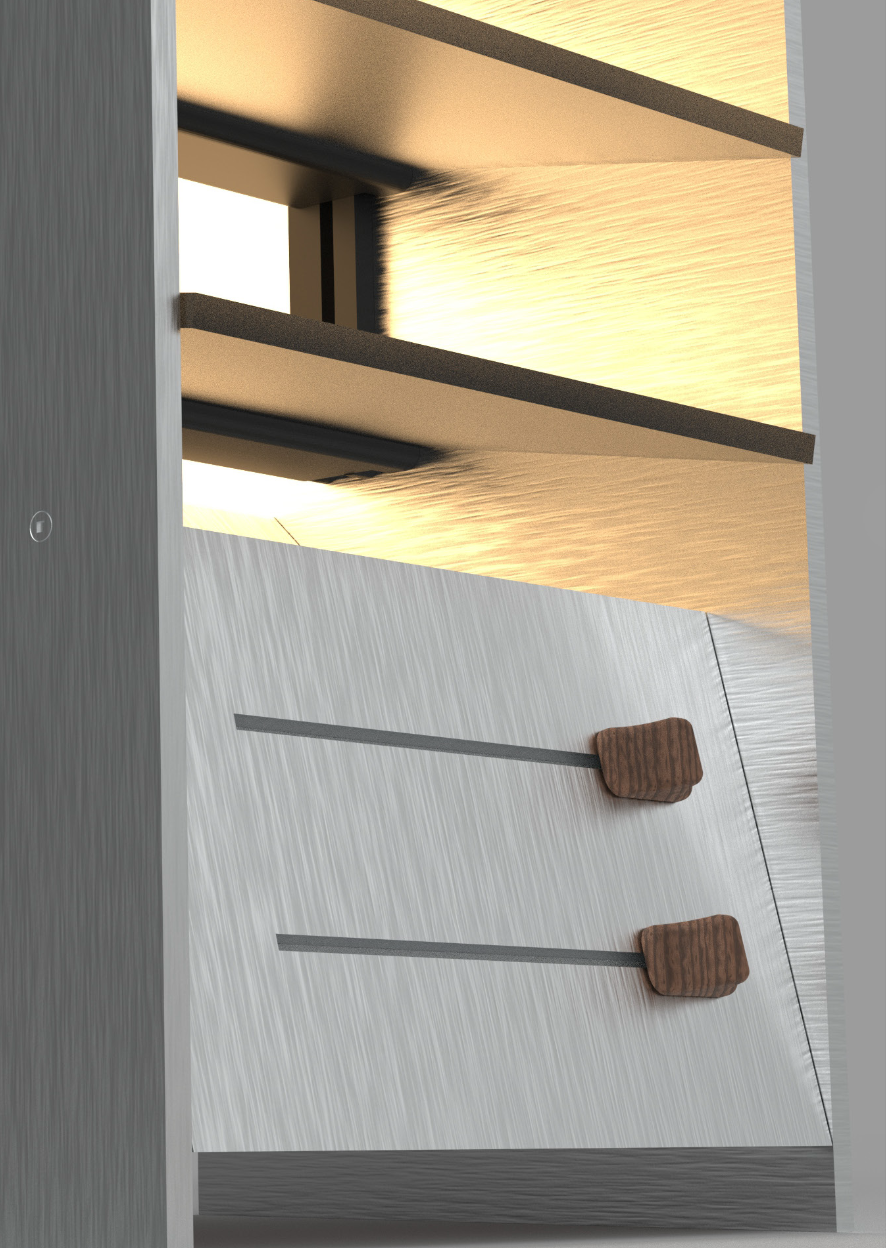
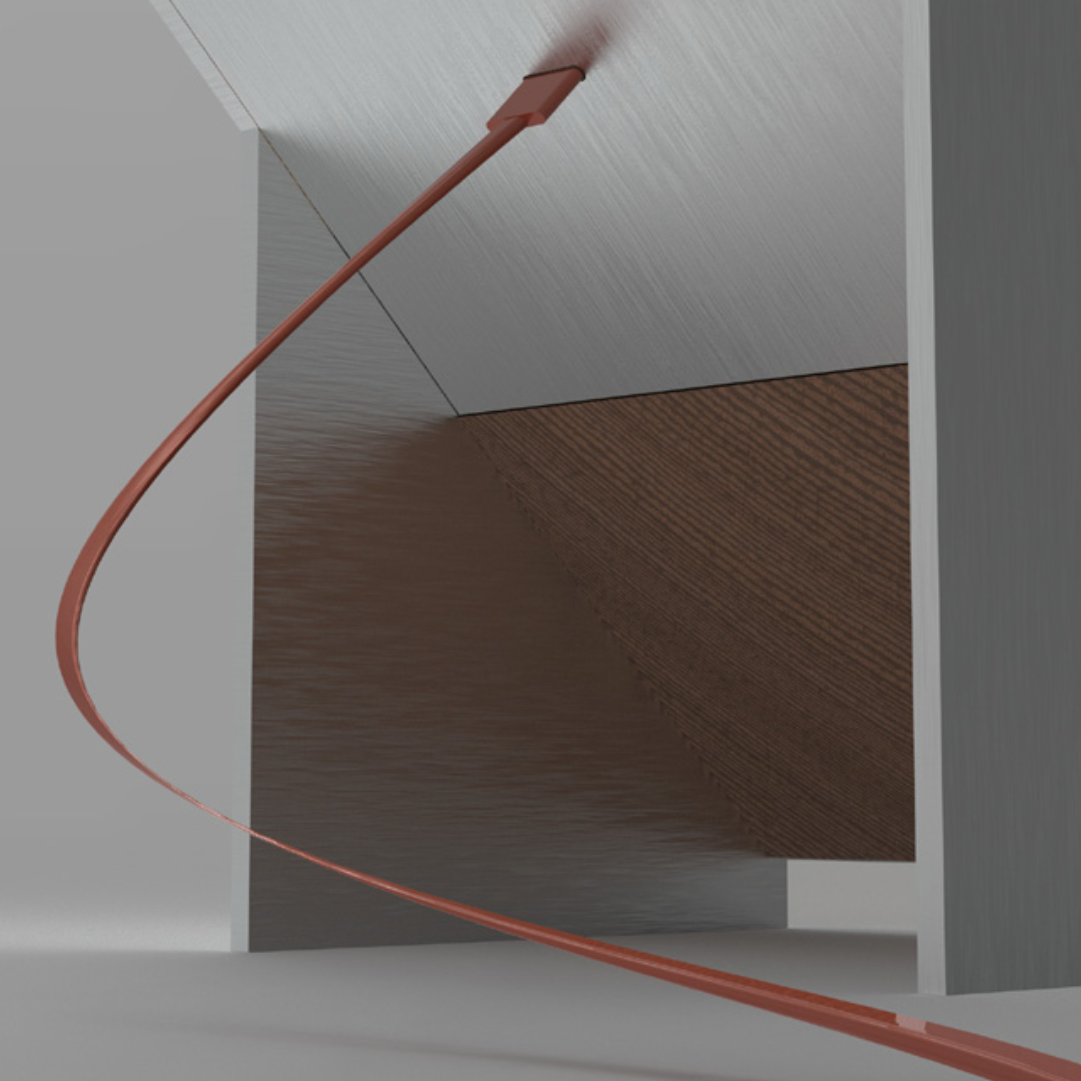
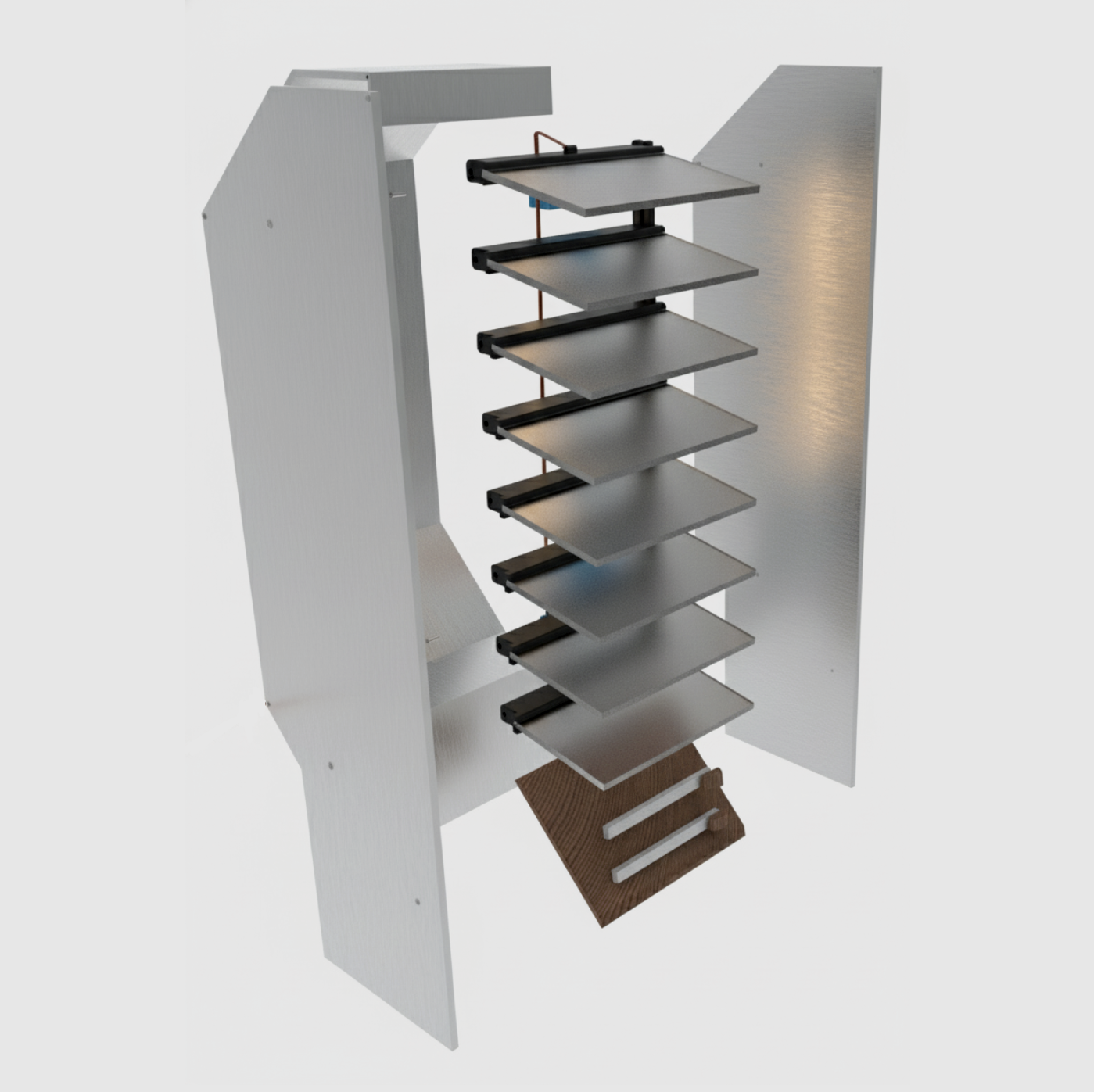
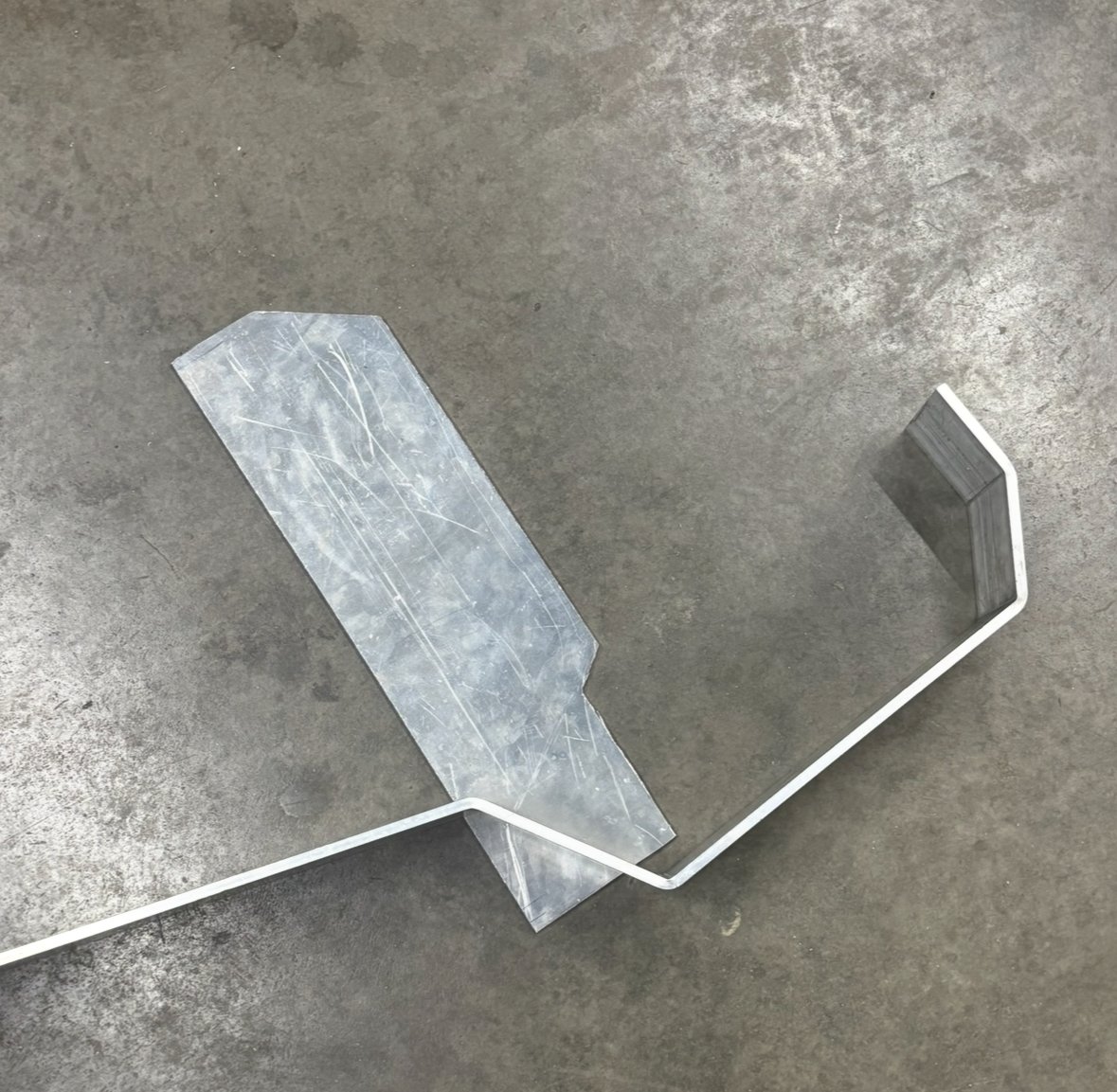
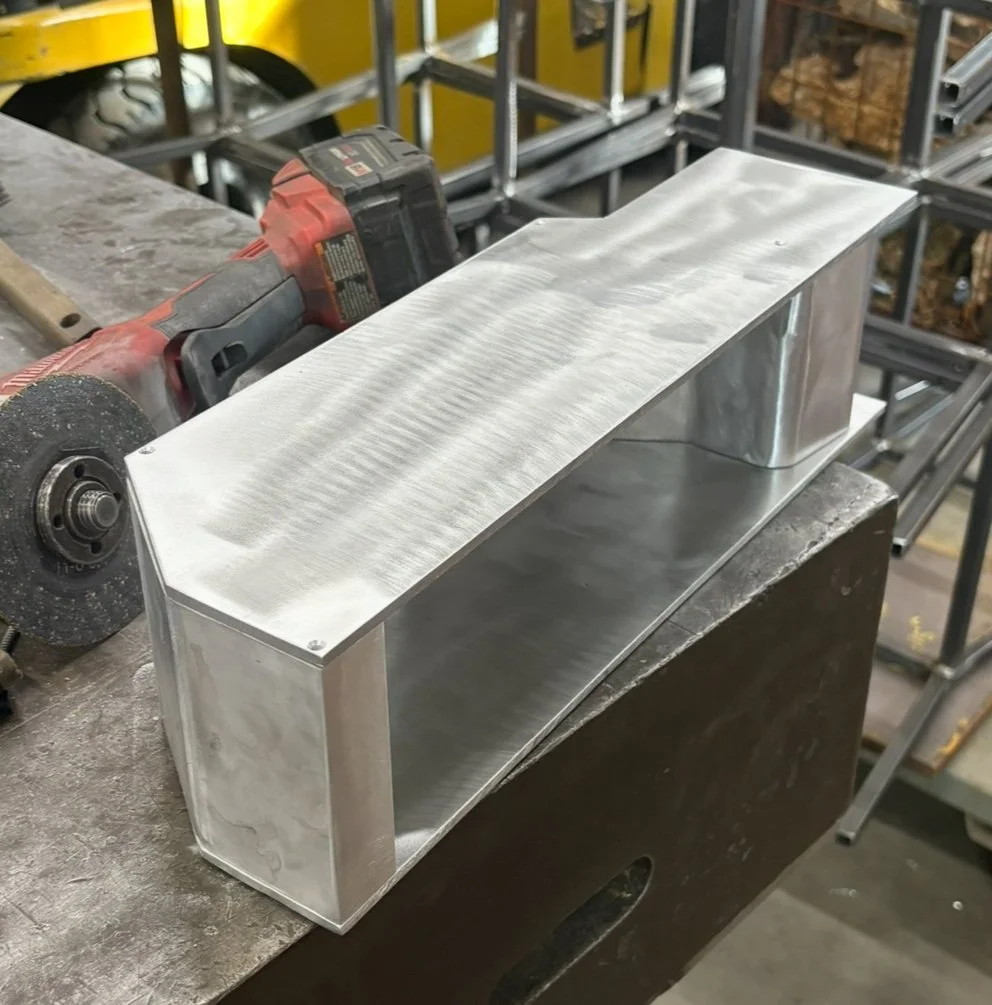
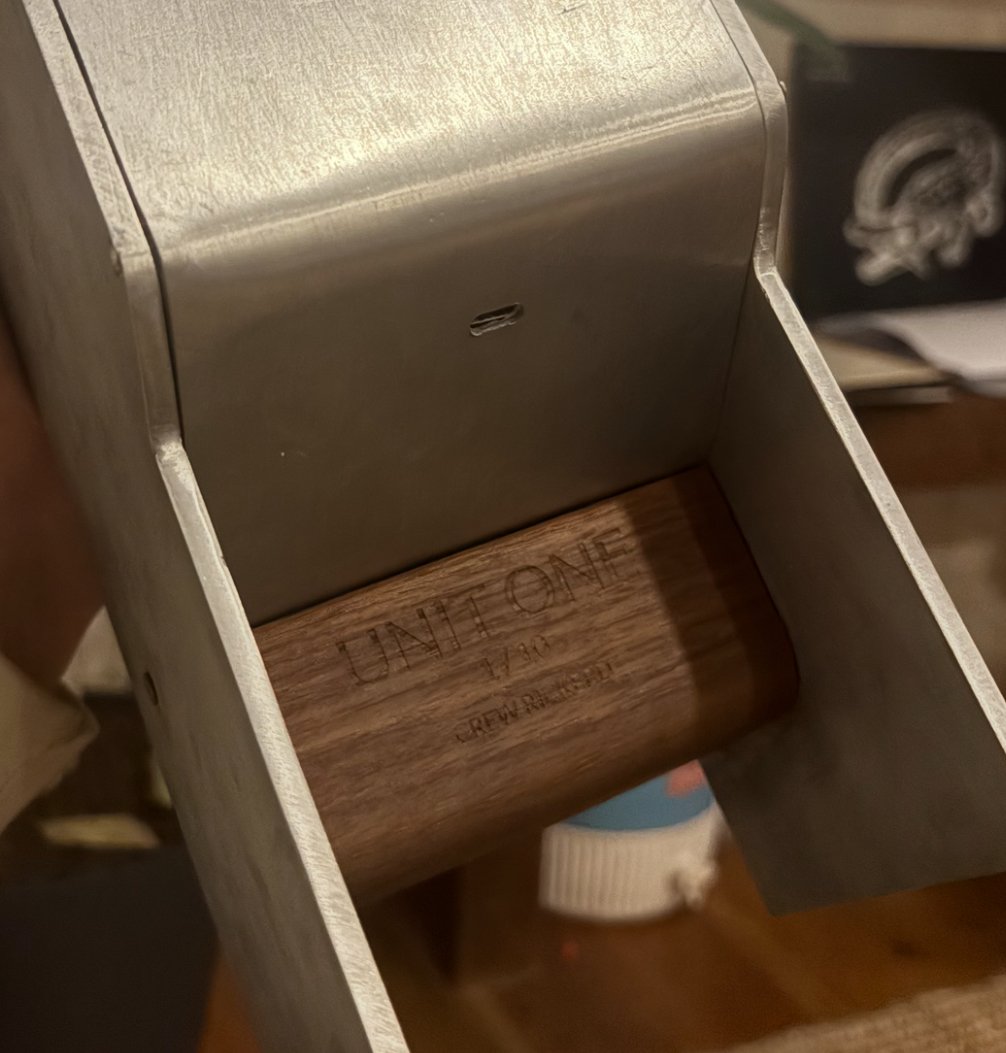
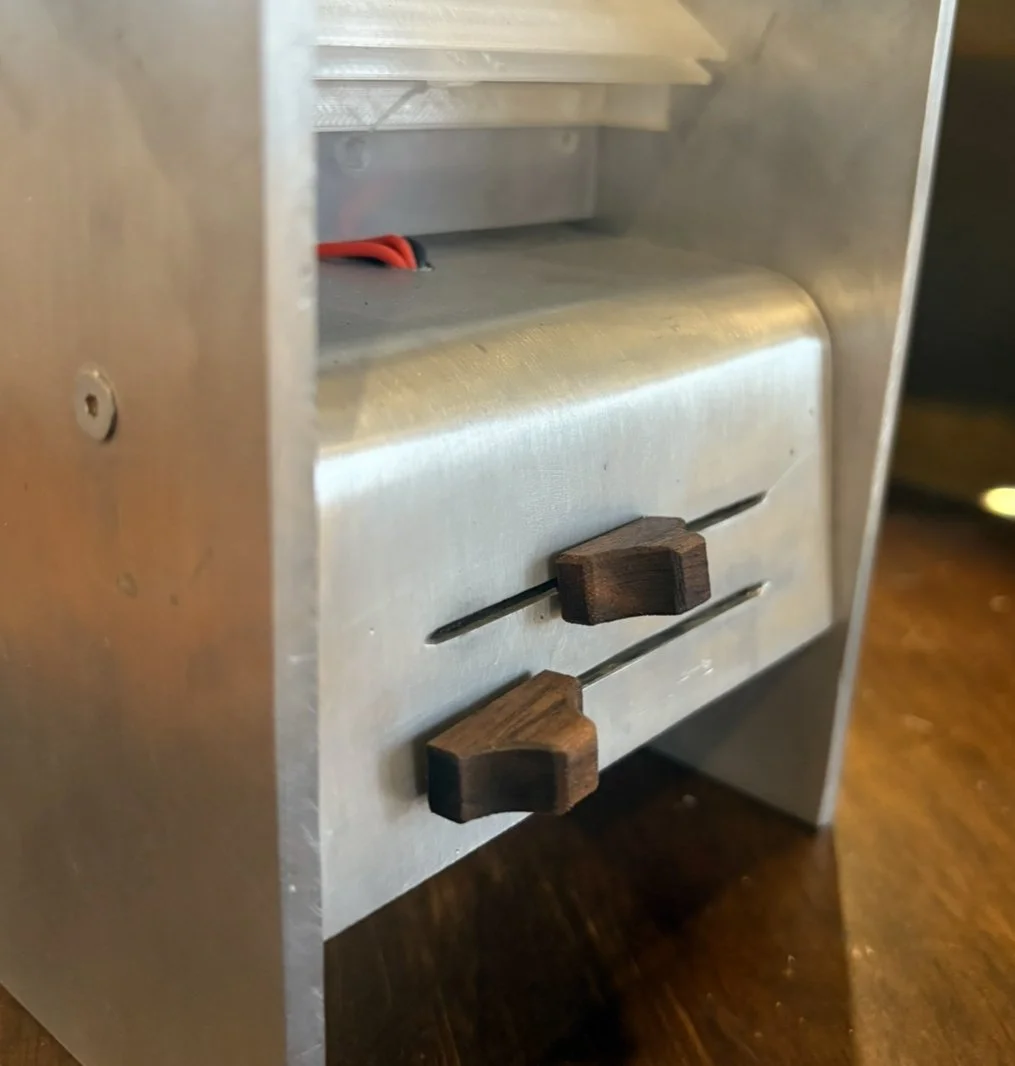
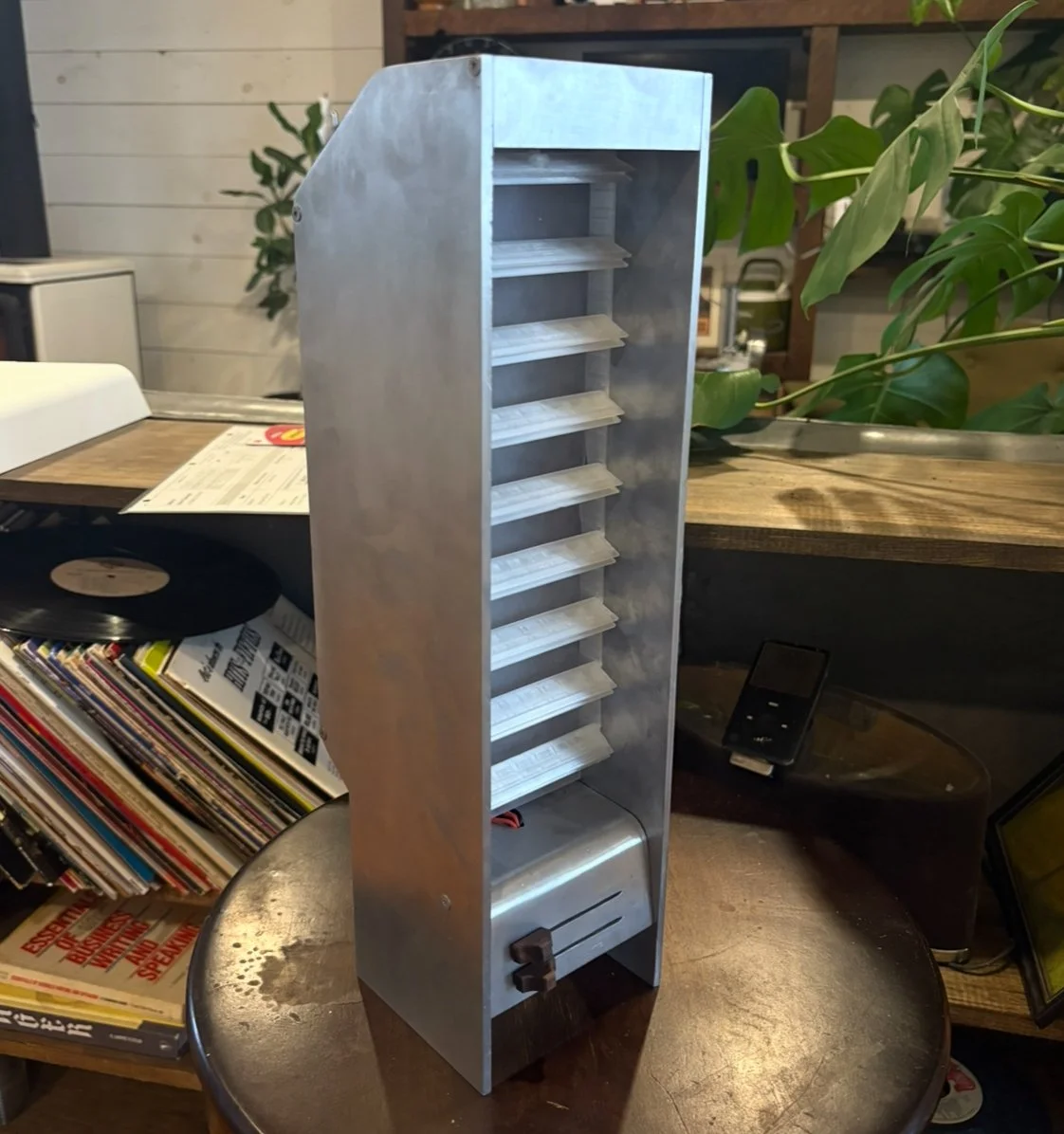
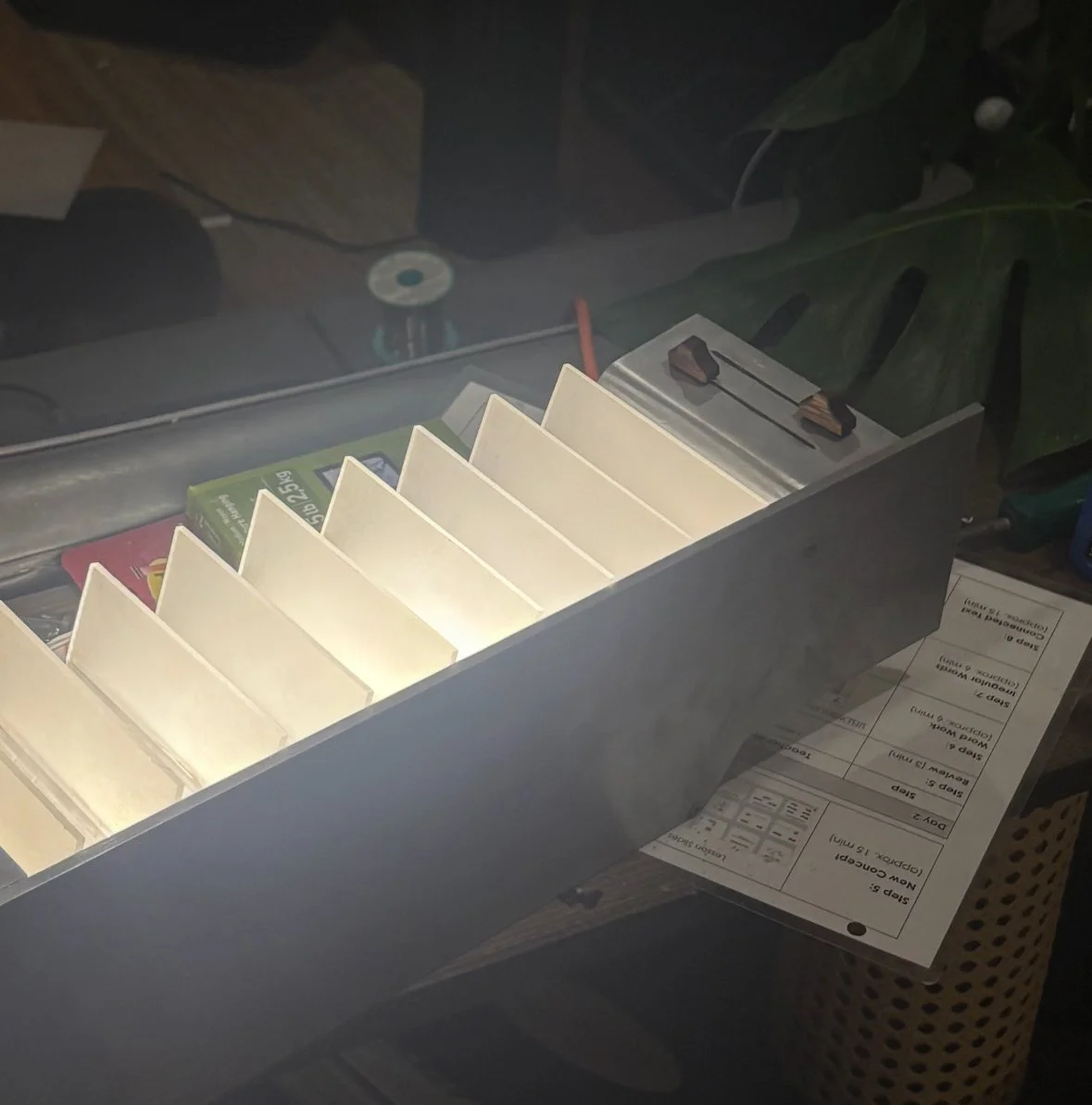
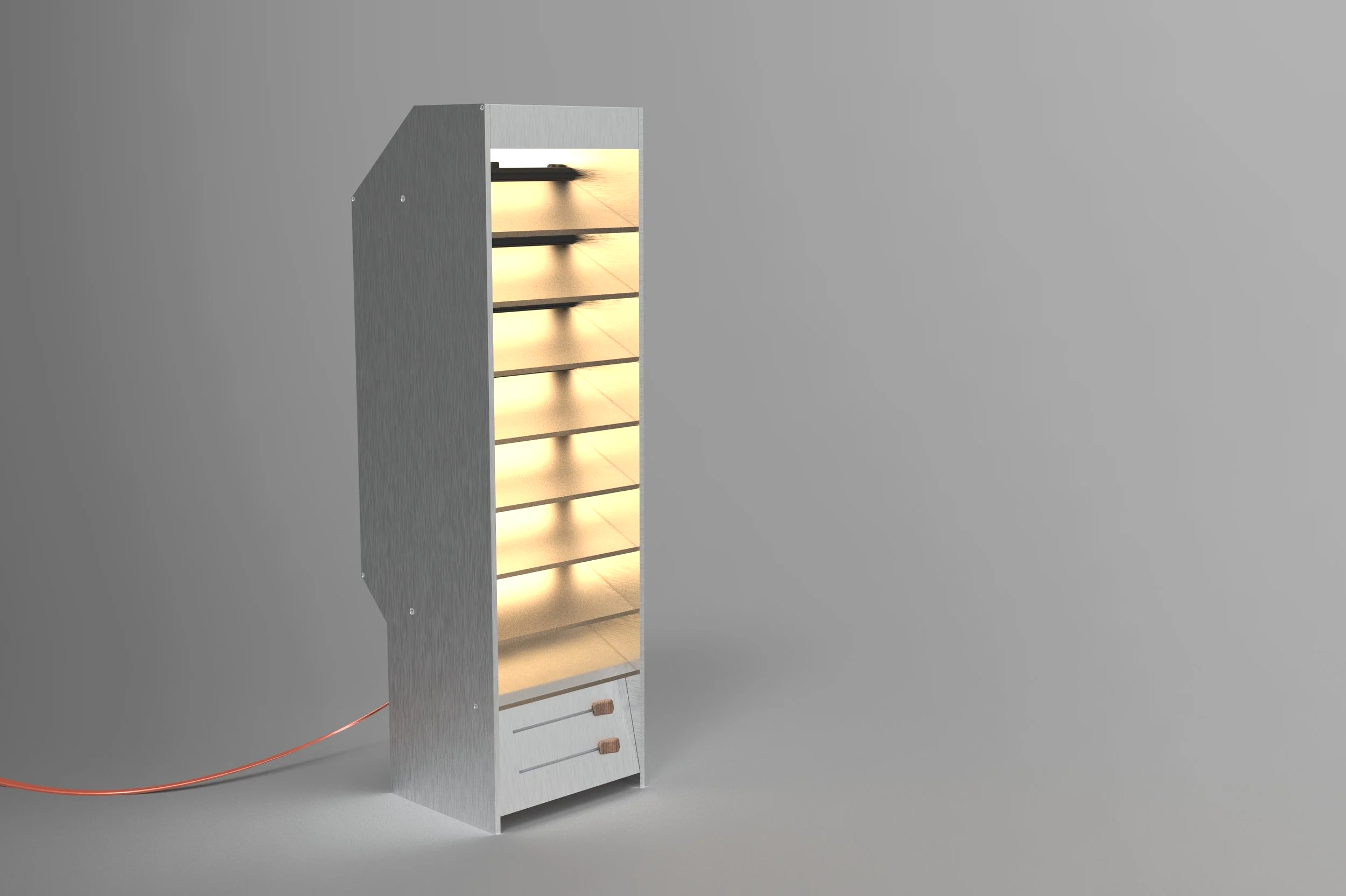
The lamp uses a Pico 2 board, LED lights, sliding potentiometers, a servo motor, and supporting electronics, housed in a combination of PLA, aluminum, acrylic, and walnut.
-
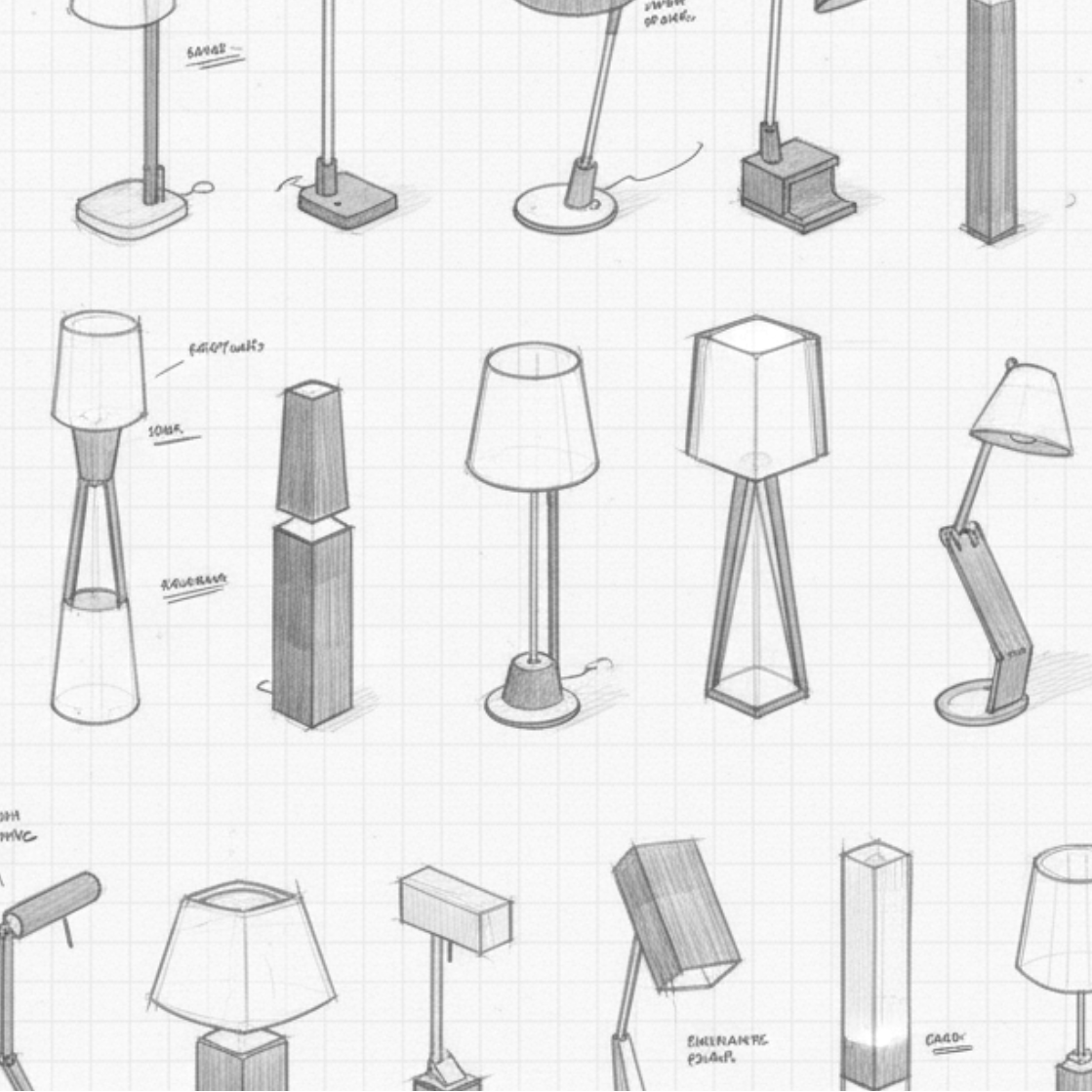
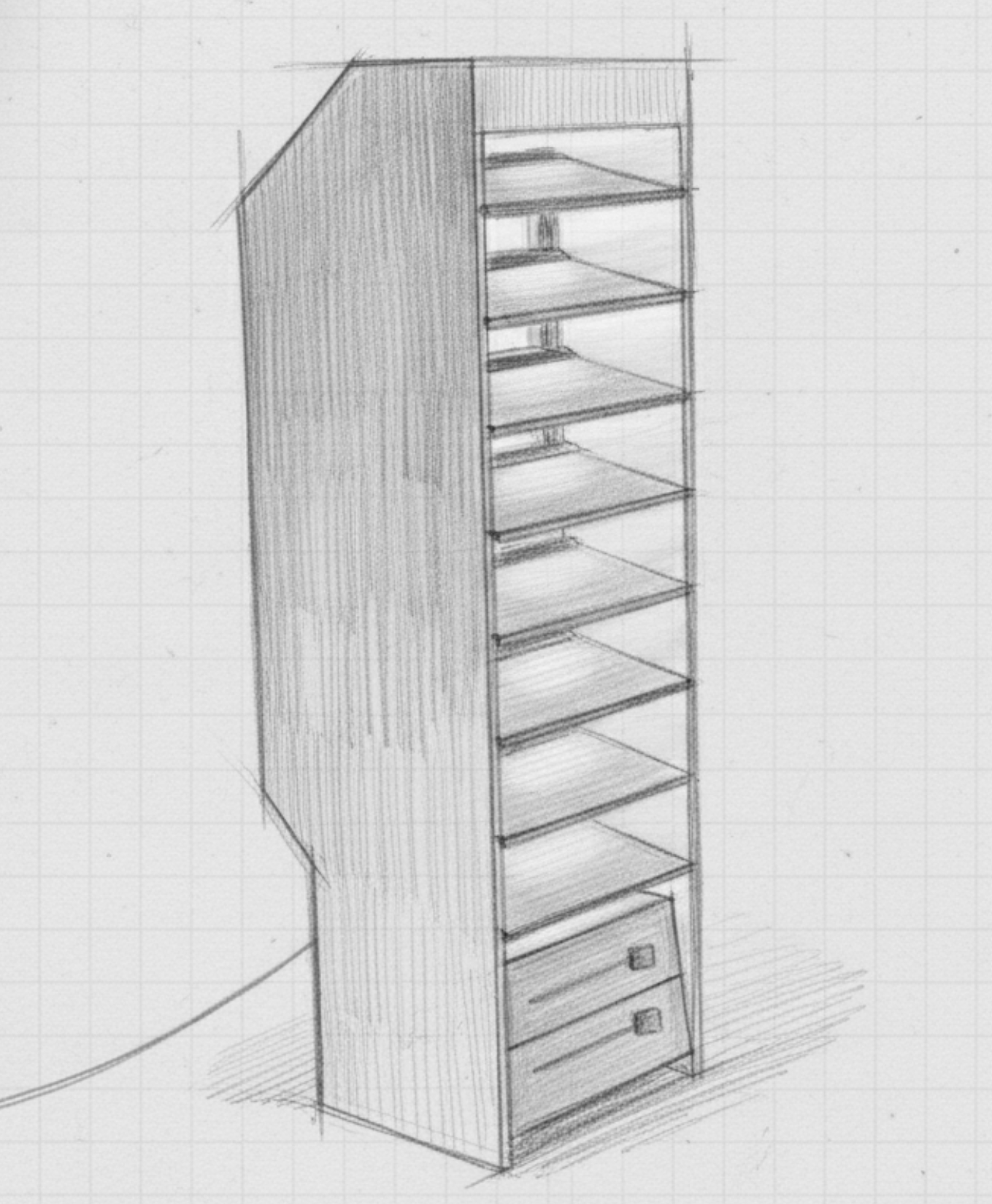
The design focuses on a timeless, vertical lighting form that allows users to physically control light through adjustable sliding shades.
This lamp was designed as a balance between function and expression, combining precise electronic control with tactile, mechanical movement. Adjustable shades move up and down to modulate brightness and diffusion, encouraging direct interaction with the light rather than passive adjustment. The contrast between industrial materials and warm wood creates a piece that feels both engineered and refined. Designed to be timeless, the lamp functions as both a practical lighting system and an expressive object within a space.