Black Widow
Light
-
The challenge was to design a compact medical light tailored to a specific market where mobility, adaptability, and reliability are critical.
-
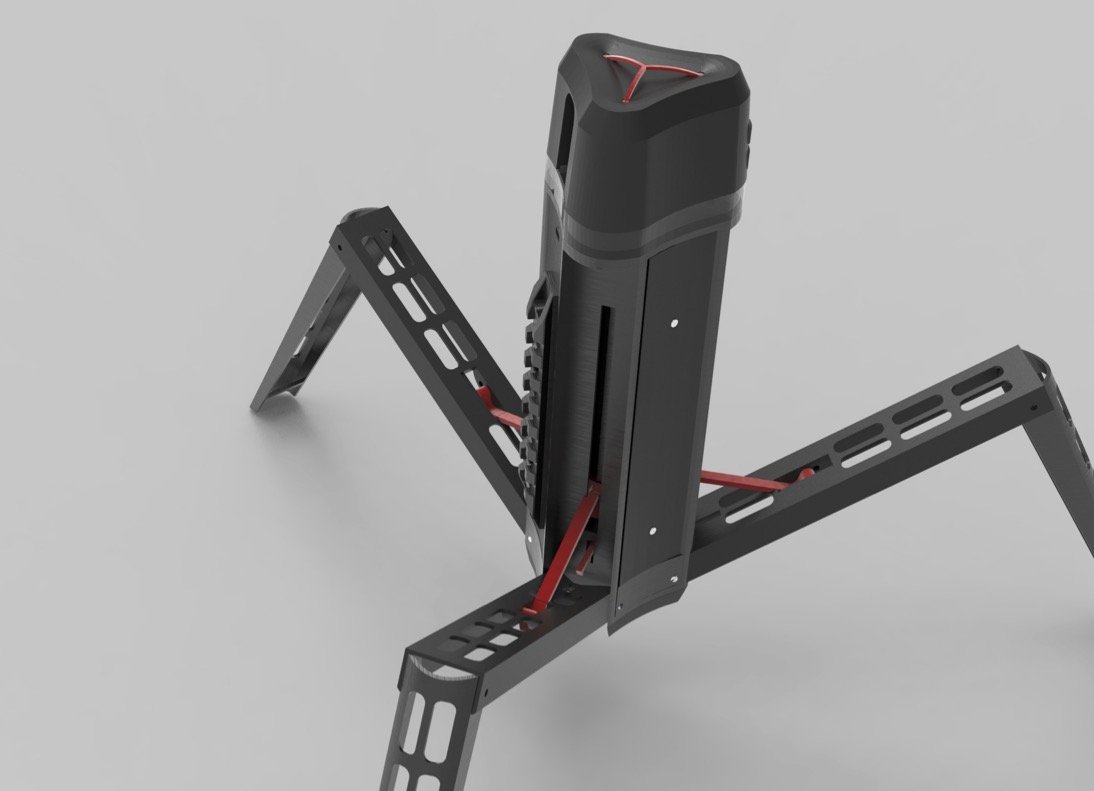
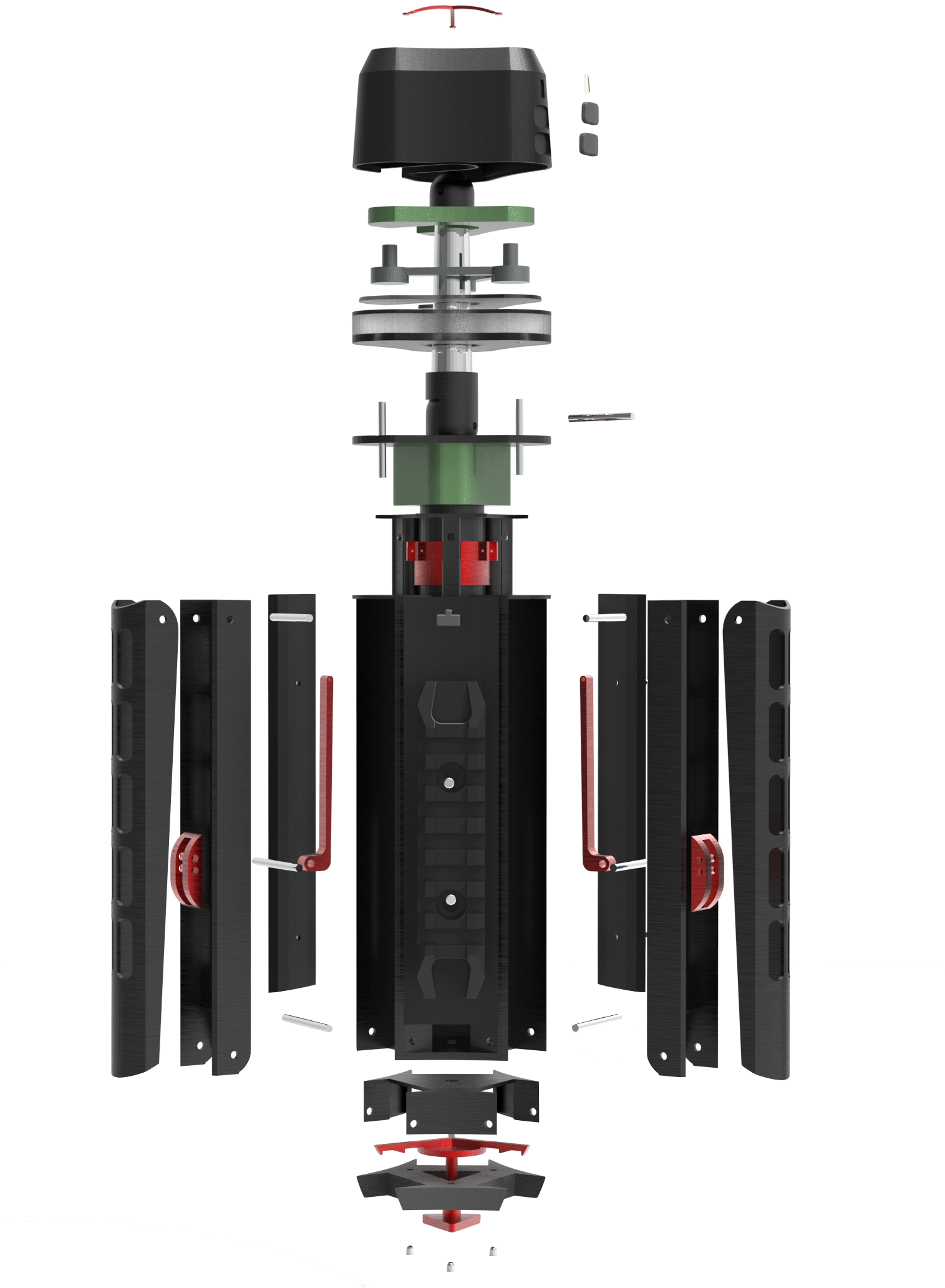
The light is constructed from titanium, anodized aluminum, polycarbonate, rubber, and stainless steel, and is powered by a 4.7V battery with an internal PCB and high-output LED.
-
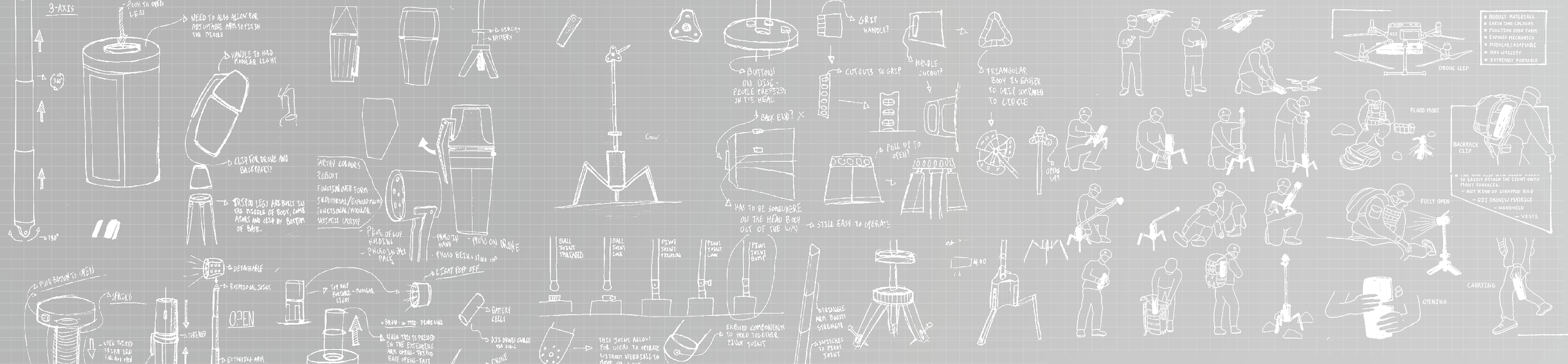
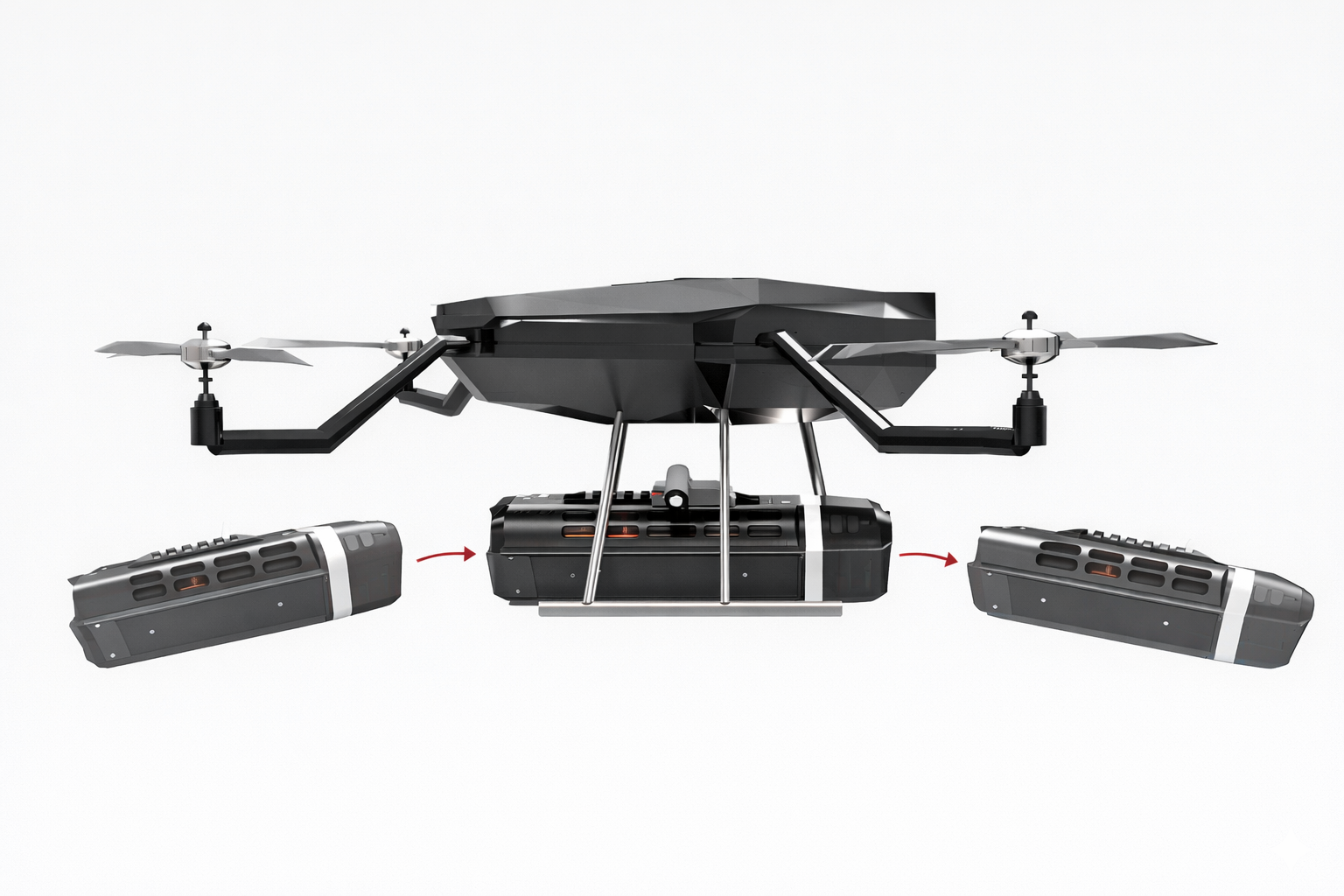
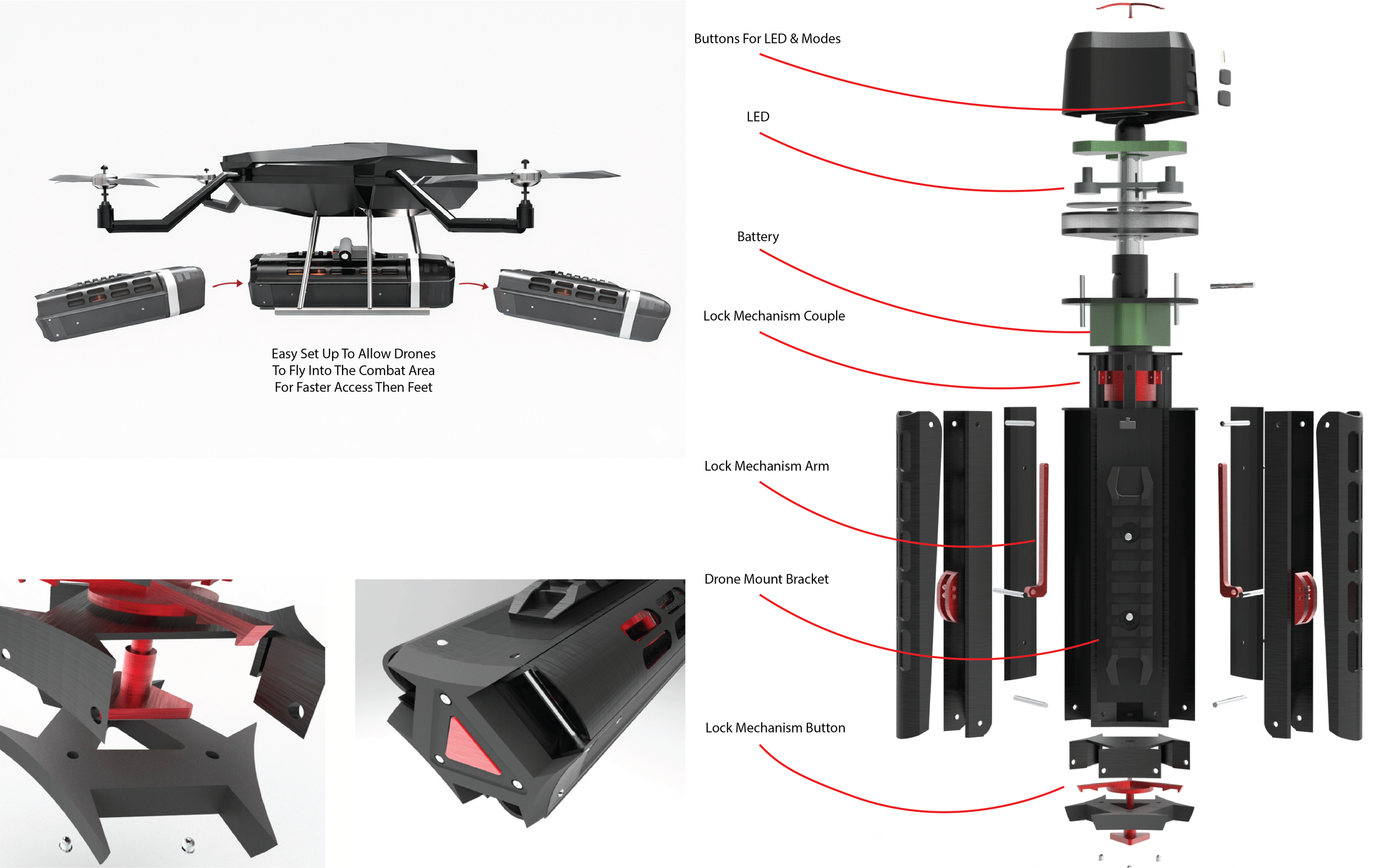
The design focuses on a modular medical lighting system intended for military use, with the ability to be easily transported and deployed via drone.
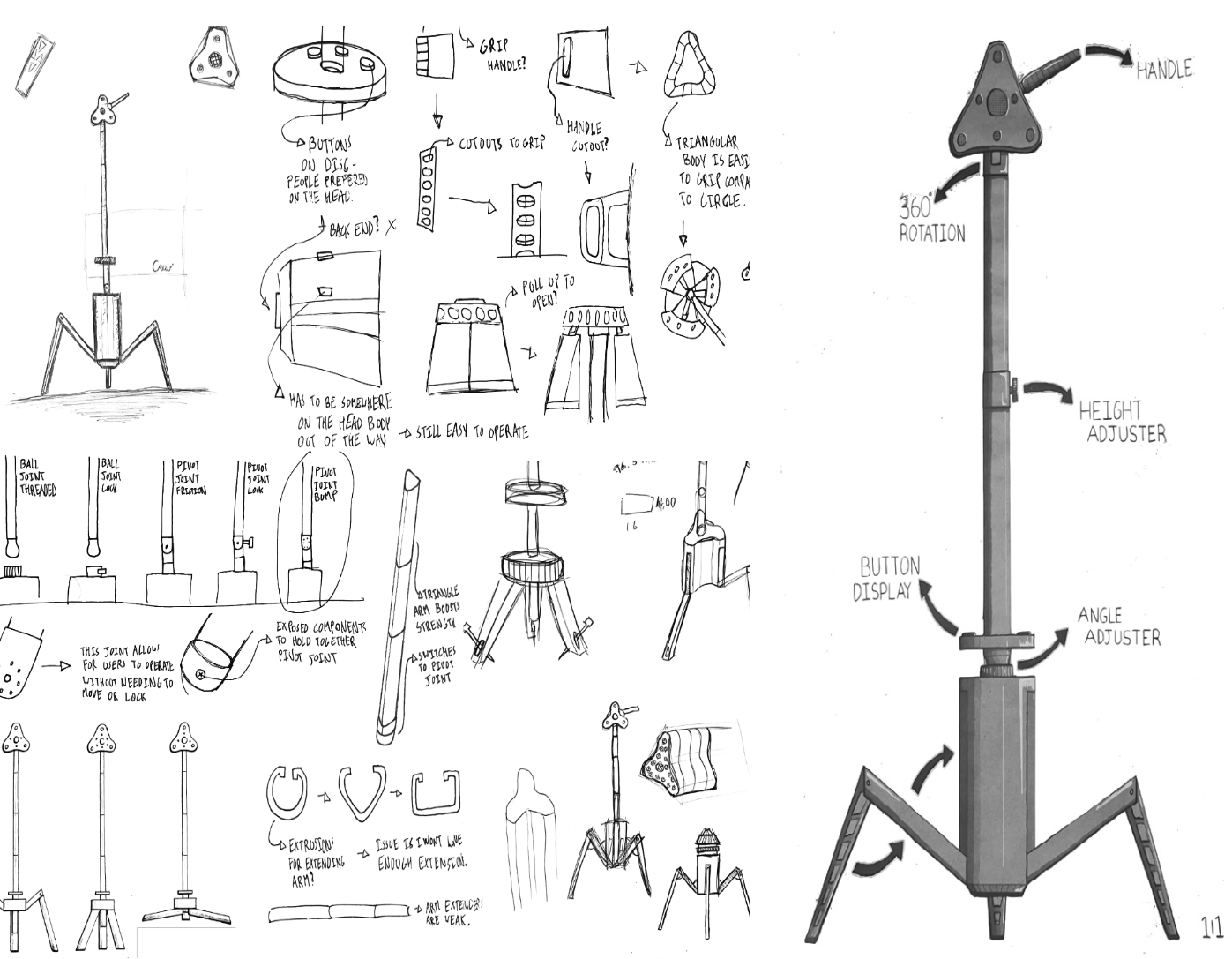
Military medics operating in combat zones often face limited visibility in unpredictable and hard-to-reach environments. Existing lighting solutions such as handheld flashlights or large surgical lights lack the modularity, adjustability, and tactical functionality required in these conditions. This compact medical light is designed to attach directly to drones for rapid deployment across rough terrain, reducing setup time and physical strain on personnel. An adaptable tripod system allows the light to stabilize on uneven surfaces, while adjustable positioning supports a range of medical procedures and user needs. Together, these features enhance operational efficiency and improve patient care in demanding field conditions.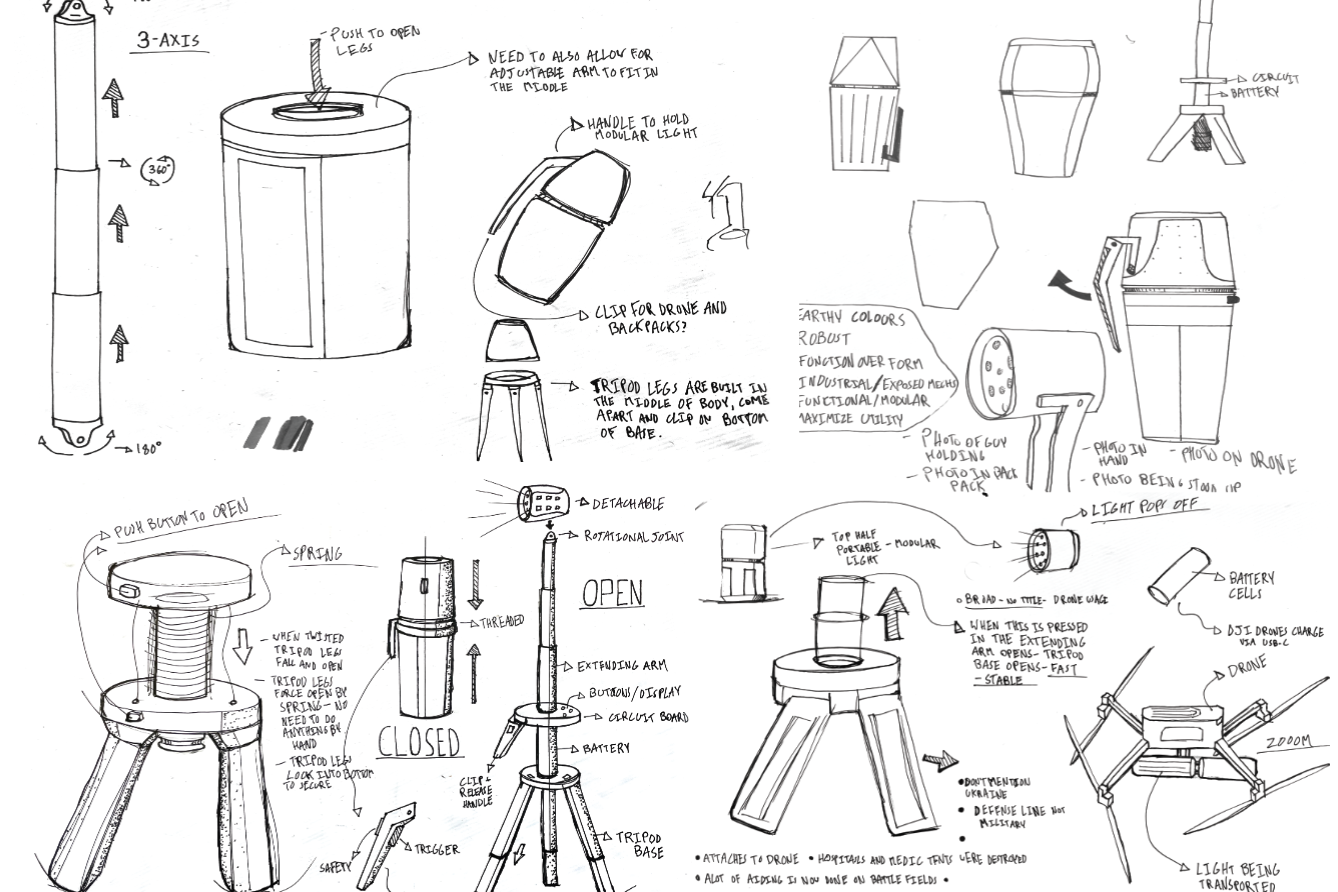
Phase One

Phase Two
Phase Three
Phase One
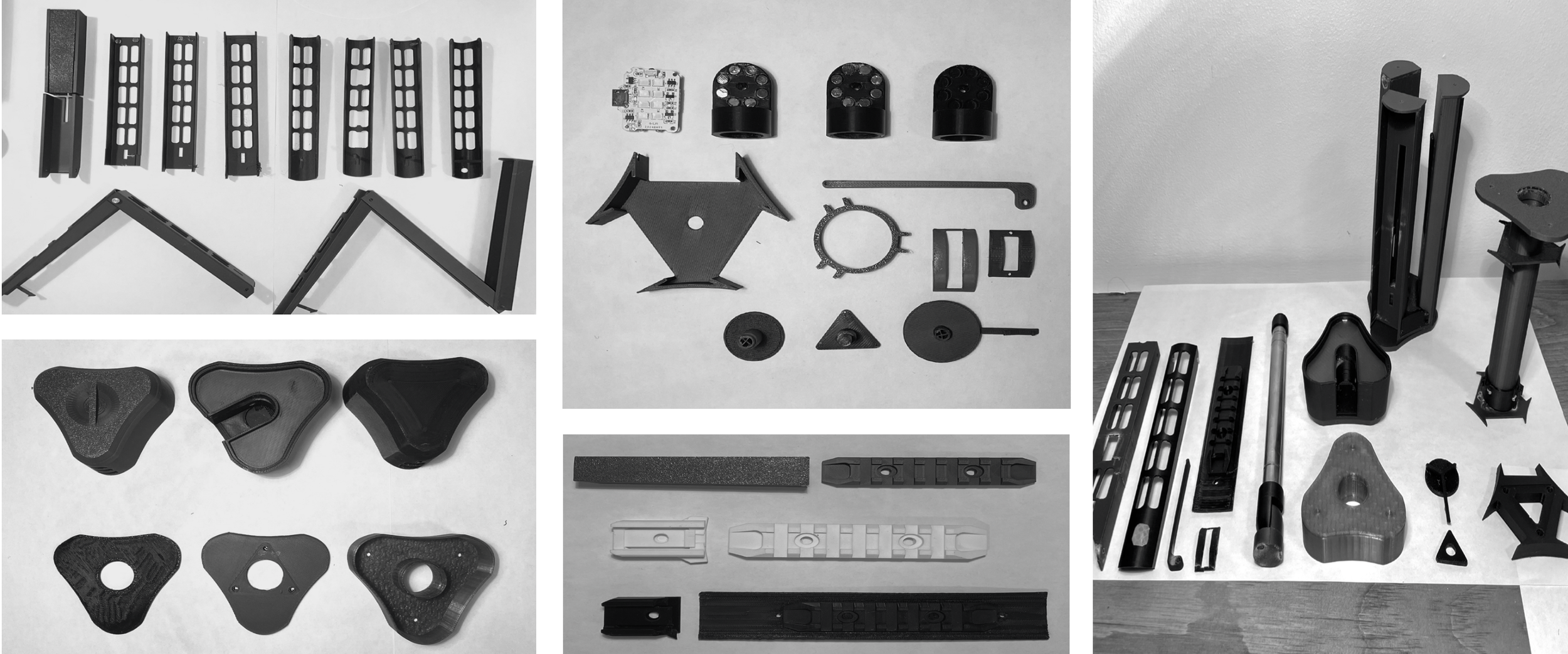
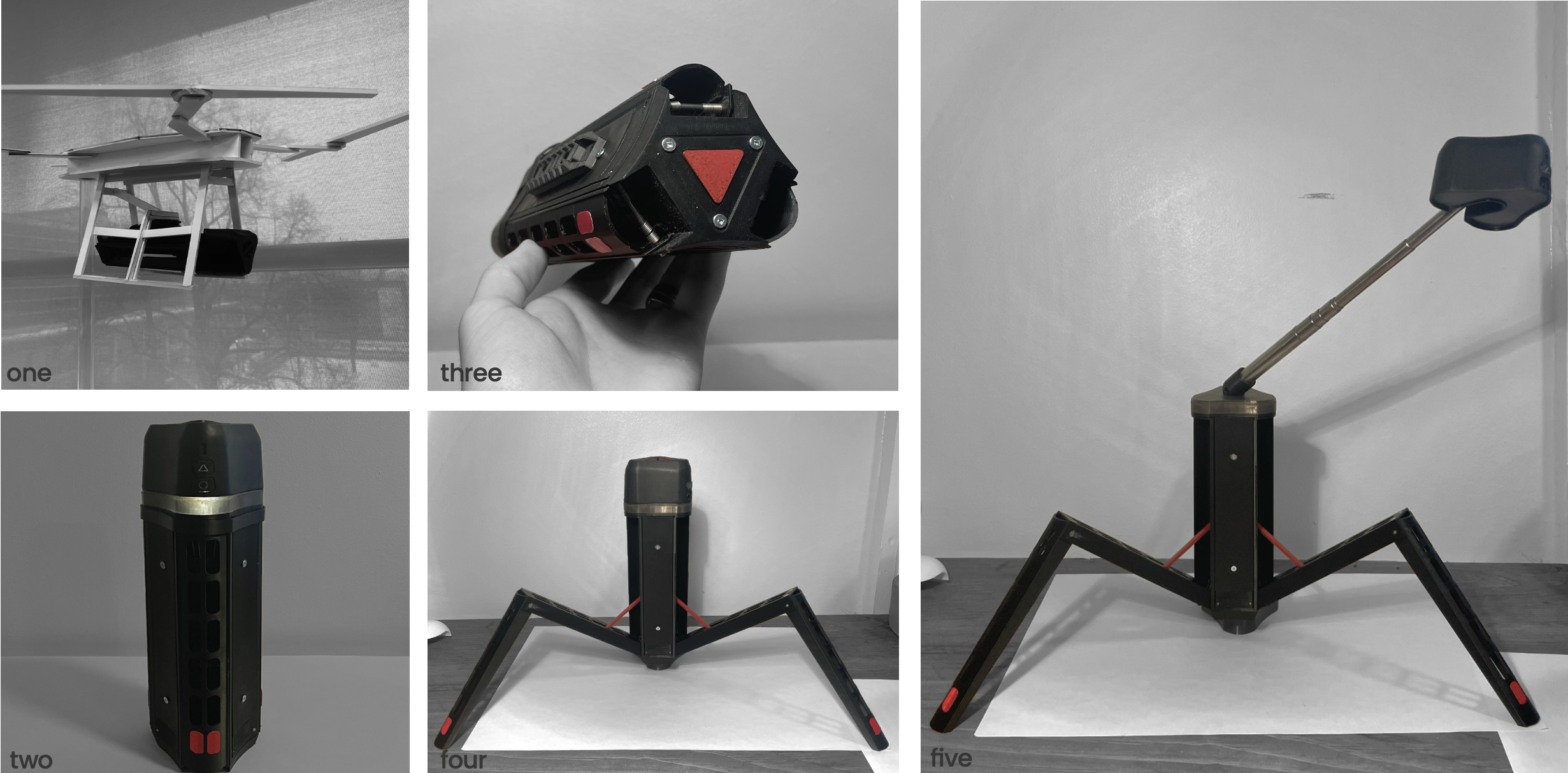
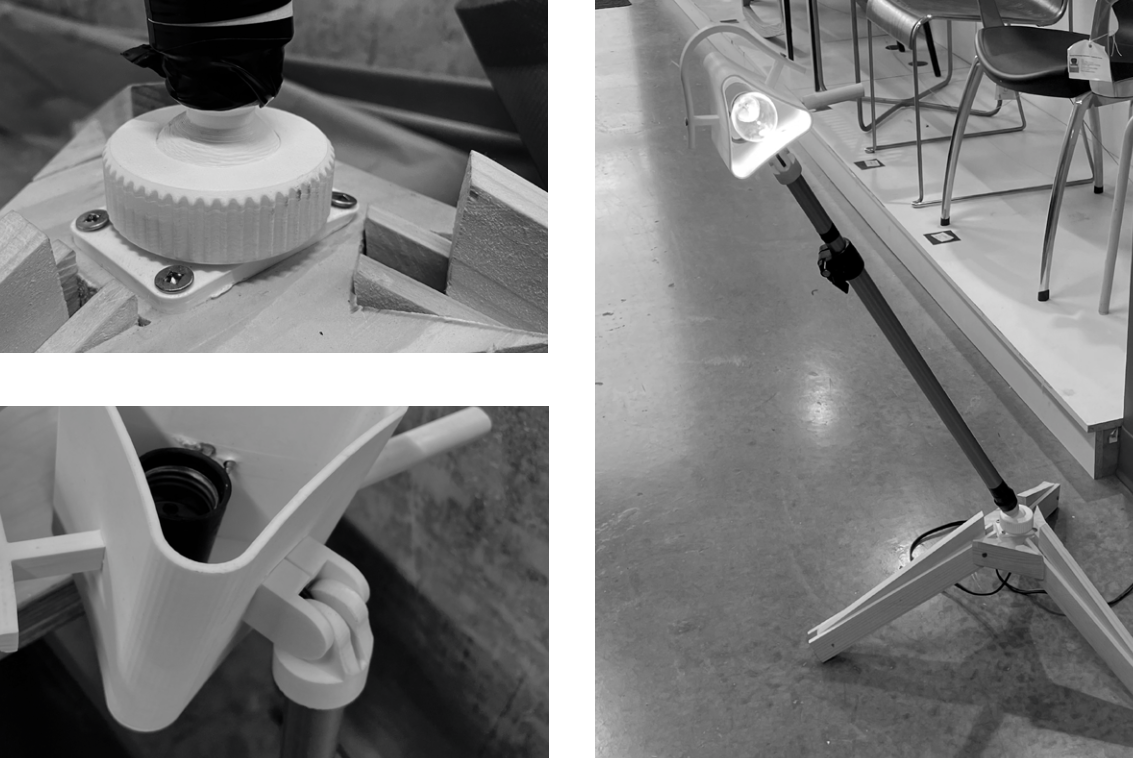
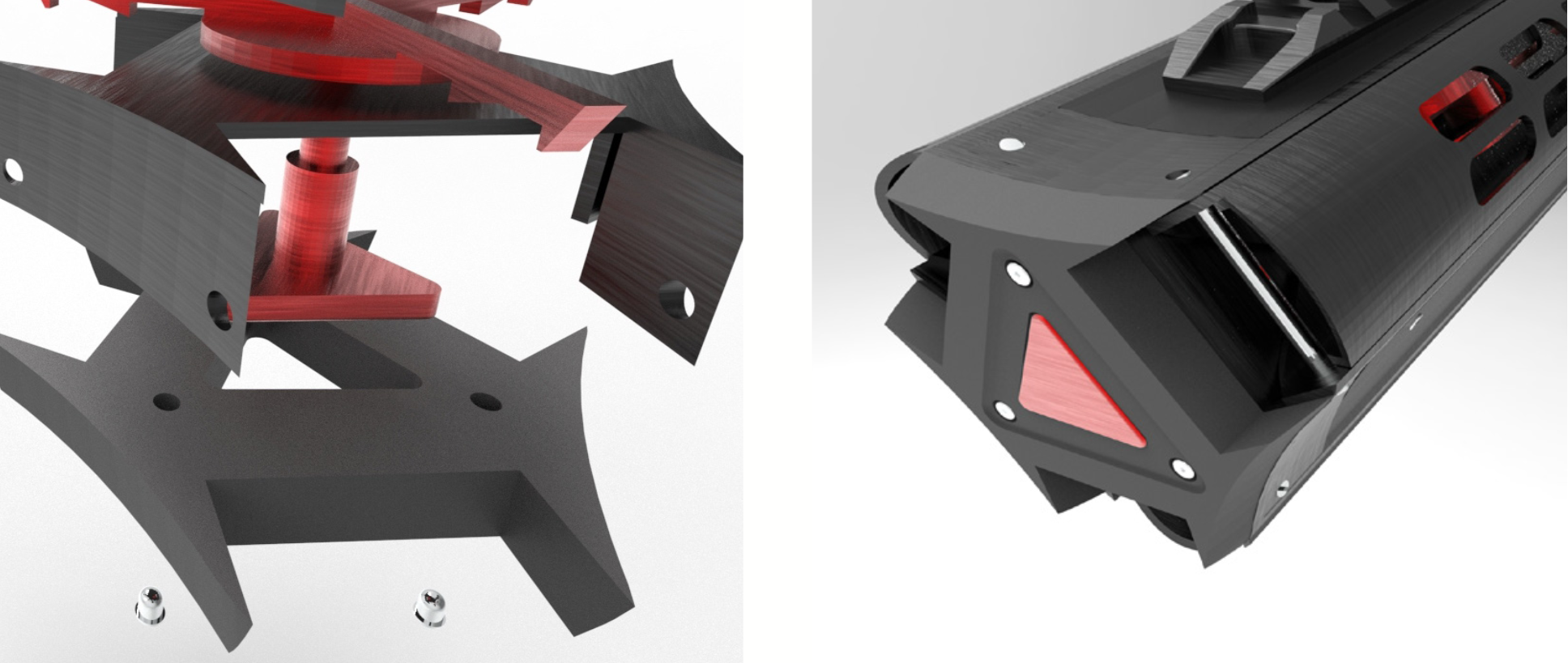
The main challenges in this project stemmed from CAD development, design constraints, and especially prototyping. Although the final deliverable was intended to be a looks like model, I chose to push it further by integrating real functionality, requiring a finely tuned spring driven deployment mechanism. Achieving reliable performance took nine different prototypes before the system worked consistently, reinforcing the importance of precision, iteration, and learning through failure. The process also emphasized how critical time management is when balancing repeated prototyping with overall deadlines.
I built nine different iterations of nearly every component of this medical lamp. Through over 100 hours of 3D printing, countless cardboard mockups, and many failed models, the project became one of the most enjoyable experiences I’ve had as a designer. Constantly testing, tweaking, and refining each part allowed the final model to fully function as it was intended.The Exciting Phase - 4
Phase Four